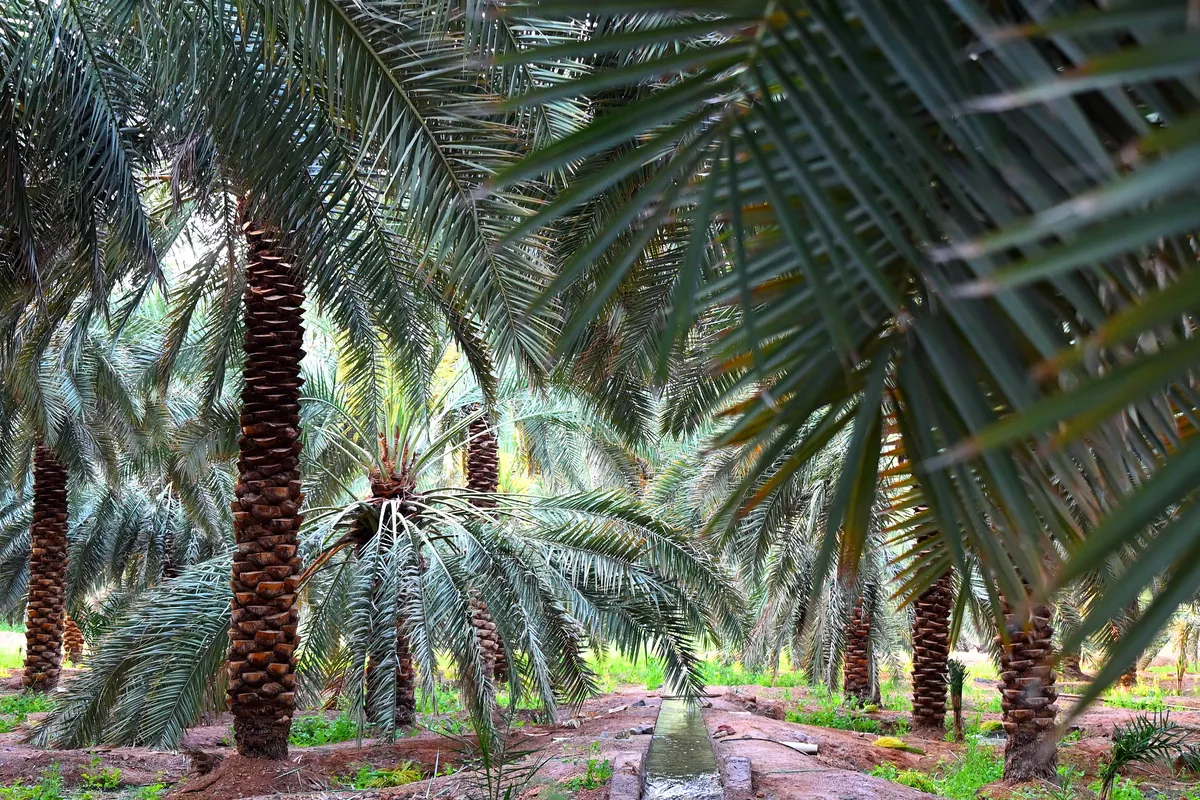
Most itineraries treat the date groves as scenery on the way to somewhere else. They are worth more than that. Madinah exists where it does because of water and farmland, and an hour among the palms explains the city's position better than most of the sites on a standard route.
A city built on water
A settlement in this landscape needs reliable groundwater and land flat enough to work. The valley floor here has both, fed by water coming off the surrounding high ground and held in wells that supported cultivation year after year. Everything else — the routes, the markets, the neighbourhoods — followed the farmland.
That is why the historical sites cluster the way they do. They are not scattered at random across a desert; they sit around a working agricultural basin.
What the groves show you
- How the plots are laid out around their water source, and how little has changed about that.
- The difference between the cultivated valley floor and the volcanic ground just beyond it.
- Why the northern approach mattered so much, when every other side was farmland or lava field.
- The scale of date production, which is still a serious industry rather than a heritage display.
Dates as more than a souvenir
Madinah dates carry a reputation that goes well beyond the city, and the varieties differ more than most visitors expect — in texture, sweetness and price. Buying them where they are grown, from someone who can explain the difference, is a better experience than picking up a box at the airport.
Visitors remember the mosques. The people who live here would tell you the groves are just as much a part of what Madinah is.
Fitting it into a short stay
This works well as a late-afternoon stop, when the light is good and the heat has dropped. It combines naturally with a viewpoint over the valley — the groves from ground level and then the same landscape from above, which is when the shape of the city finally makes sense.